
Weekfold › Edition 45 › Conflict
Conflict · Sunday 8 November 2026
US opens land and Caspian front against Iran with Task Force Iron Gate
CENTCOM extends its months-long naval blockade to Iran's borders as strikes, mine claims and Qatari-mediated talks continue side by side.
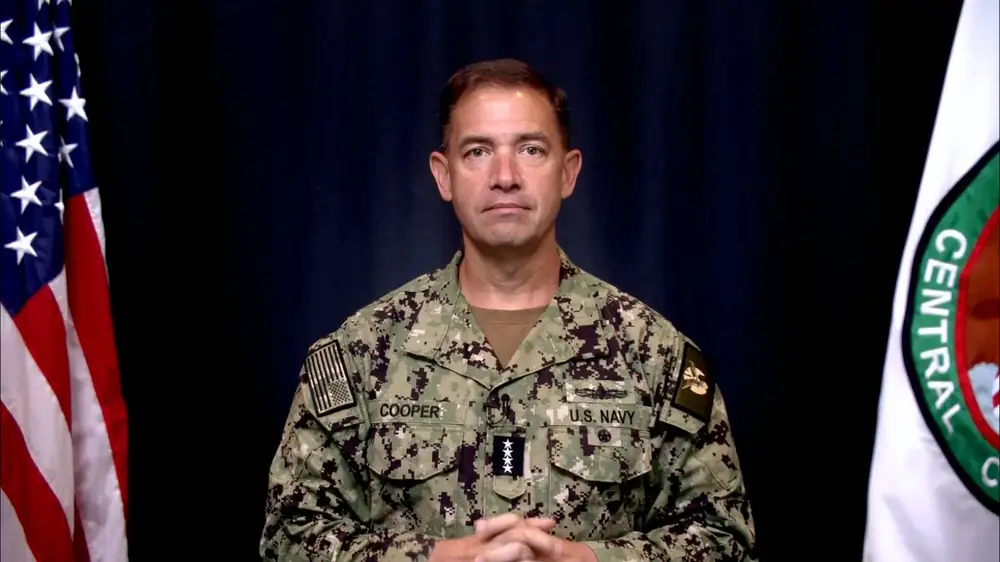
US Central Command announced a new unit on Saturday, 7 November, aimed at cutting off the routes Iran uses to bring weapons and other materials in by land. Called Task Force Iron Gate, it widens the naval blockade of Iranian ports that Washington has enforced for months to cover Iran's land borders and the Caspian Sea.
The unit is small. Reports put it at about 20 civilian and military personnel, based in Tampa, Florida, working with other US agencies to stop advanced weapons systems, dual-use technologies, sanctioned materials and what the command calls illegal revenue streams. CENTCOM chief Admiral Brad Cooper said it reinforces the success of the blockade at sea. CBS News noted that the announcement did not explain how the task force would operate, whether it would involve military action, or whether US ships could even work on the Caspian.
The command says the sea blockade has kept more than $25 billion of Iranian crude off the market. It also says that since July US forces have turned back 147 commercial vessels and disabled five that refused to comply. On Saturday an aircraft fired precision munitions at the stern of the St Kitts-flagged cargo ship M/V Huda in the Gulf of Oman after its crew was told to leave the targeted areas.
Analysts were split on how much it matters. Michael Mulroy, a former Pentagon Middle East official, called it mainly a coordination body, but said any escalation ordered by President Donald Trump would probably hit economic and infrastructure targets rather than the military sites struck earlier in the war. Qatar University's Mahjoob Zweiri said the effort may be largely symbolic, since the US has no Caspian presence and Azerbaijan or Armenia would be unlikely to help for fear of upsetting Russia. Rami Khouri of the American University of Beirut argued that Iran's old trading networks make sealing every route close to impossible. Al Jazeera lists seven land neighbours: Afghanistan, Armenia, Azerbaijan, Iraq, Pakistan, Turkey and Turkmenistan.
Tehran dismissed the move. A Revolutionary Guards spokesman, quoted by Fars, called it a play on words and said Washington cannot collapse Iran's economy this way. Iran's state news agency reported explosions on Qeshm Island and in Jask, Sirik and Bandar Abbas. Trump had confirmed minor strikes on Qeshm the day before, saying a small anti-aircraft device was knocked out within minutes. The Guards also said two more tankers hit sea mines near Hormuz, though CBS reported that no maritime officials had confirmed Iran's mine claims and that Trump accuses Tehran of inventing them.
Diplomacy has not stopped. Trump spoke with Qatar's emir on Thursday about ending the war, and Qatari-mediated talks continue. Al Jazeera, citing the Wall Street Journal, reports that Cooper and Defense Secretary Pete Hegseth are among those urging Trump to resume attacks, while former Trump aide Joe Kent argues the task force undermines the vice president's diplomatic track.
Sources
Weekfold summarises these reports in its own words. Read the originals for full detail.
Get the whole week in one read. A free edition every Sunday.
Subscribe free Edition 45 · 2 – 8 Nov 2026